

Hip Hop Public Health brought the power of music, storytelling, and trusted messengers to tackle this health issue. First, we created “Pulse Check,” a catchy track featuring Doug E. Fresh, Artie Green, Gerry Gunn, Dr. Olajide Williams (the Hip Hop Doc), and Dr. Monique Hedmann (Dr. Mo Flow).
“We know that music is a powerful medium for reaching people with life-saving information,” said Dr. Olajide Williams, MD, MS, co-founder of HHPH and the Vice Dean of Community Health at Columbia University Vagelos College of Physicians and Surgeons (VP&S). “Atrial fibrillation affects millions of people, but far too few are aware of this condition, their risk factors, or the symptoms. That’s why we created ‘Pulse Check’ to educate people and to inspire them to take action for their heart health.”
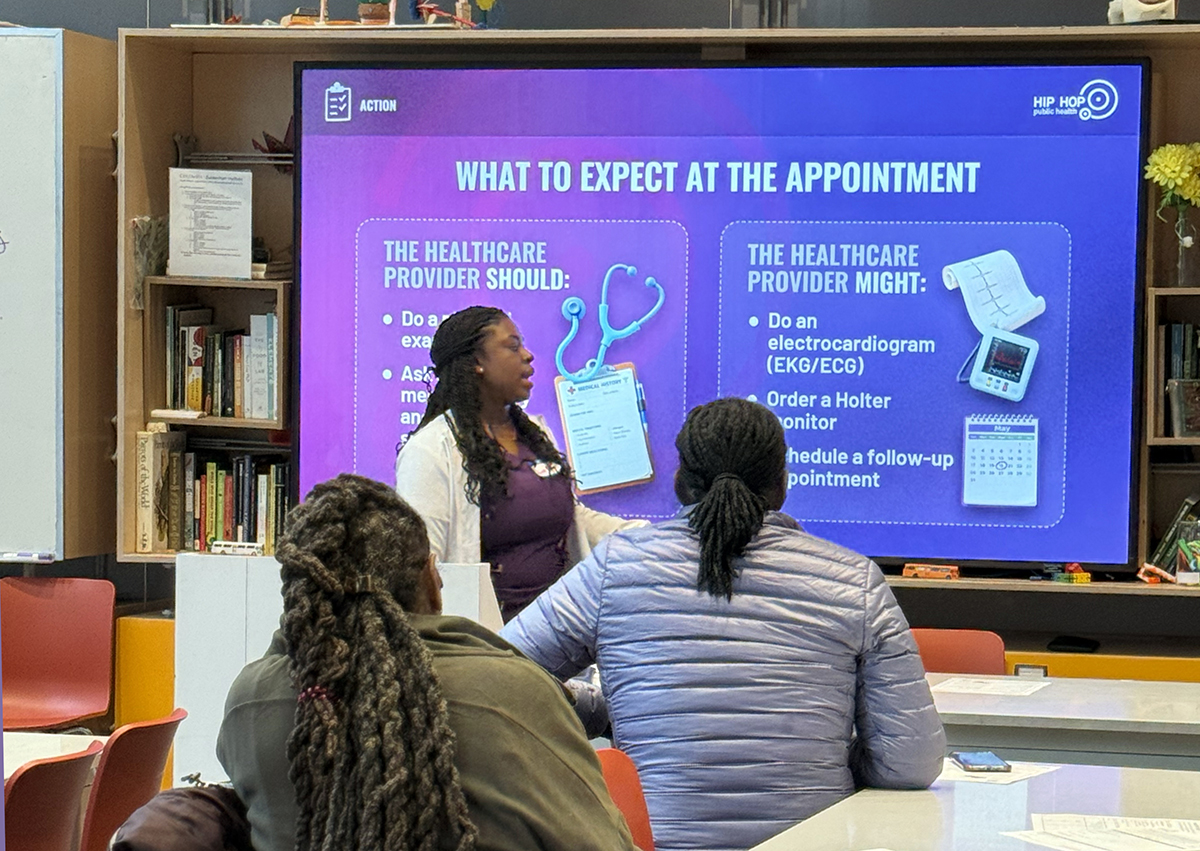
Next, we partnered with the Columbia Center for Community Health InTOuCH program and VIP Services to create an accompanying Pulse Check AFib Community Health Worker Toolkit with training and resources to bring music-based messages about AFib into communities most in need of education about this topic, and to inspire and support individuals to take action and seek care.
"Community health workers are often the first — and sometimes the only — trusted health voice in someone's life. They're not strangers in lab coats. They're neighbors. And when neighbors teach neighbors how to check their pulse and recognize the signs of AFib, that's when awareness becomes action," shared Dr. Janhavi Mallaiah, Director of Programs, Columbia Center for Community Health.
What is AFib?
AFib is an irregular heartbeat and it’s one of the most common heart disorders in the United States. Having AFib increases stroke risk by up to five times. When the heart isn’t beating in a steady rhythm, blood doesn’t move through the heart as smoothly as it should. That pooling blood can form clots. If one of those clots travels to the brain, it can block blood flow, and cause a stroke.
What are the symptoms of AFib?
Symptoms can include an irregular heart beat, heart palpitations (rapid, fluttering, or pounding), fatigue, dizziness, chest pain, shortness of breath. However, one in four individuals are asymptomatic. Despite its prevalence, awareness about AFib, its signs and symptoms, and the critical importance of early diagnosis and treatment remain low. Research shows that 62% of people with AFib were unaware of the condition before diagnosis, which is why raising awareness about this condition is so critical.
What are the risk factors for Afib?
Risk factors for AFib include high blood pressure, heart disease, diabetes, obesity, smoking, alcohol consumption, and family history. With early detection, AFib can be managed through medication, lifestyle changes, and effective medical procedures.
Want to learn more?
Hip Hop Public Health’s Pulse Check AFib Resource Collection includes educational videos and other materials with instructions about how to check your pulse, identify potential signs of AFib, and seek health care. If you suspect that you or someone you love has AFib, don’t wait – seek medical care. AFib can only be diagnosed by a medical professional.
Are you a Community Health Worker or CHW organization?
Email us at [email protected] to learn more about using the Pulse Check AFib Community Health Worker Toolkit materials and training.